

News
Introduction to TB2
Introduction to TB2 (β - type) Titanium Alloy Material
TB2 Overview
TB2 alloy is a metastable β - type titanium alloy. It contains 5% Mo and 5% V as isomorphous β - stabilizing elements, 8% Cr as eutectoid β - stabilizing element, and 3% Al as α - stabilizing element, with a Mo equivalent of 18.15. In the solution - treated state, this alloy has excellent cold - forming performance and good welding performance. In the solution - treated and aged state, it has a combination of high strength and good plasticity. The main disadvantages of this alloy are its relatively high density, and relatively low elastic modulus and high - temperature creep resistance.
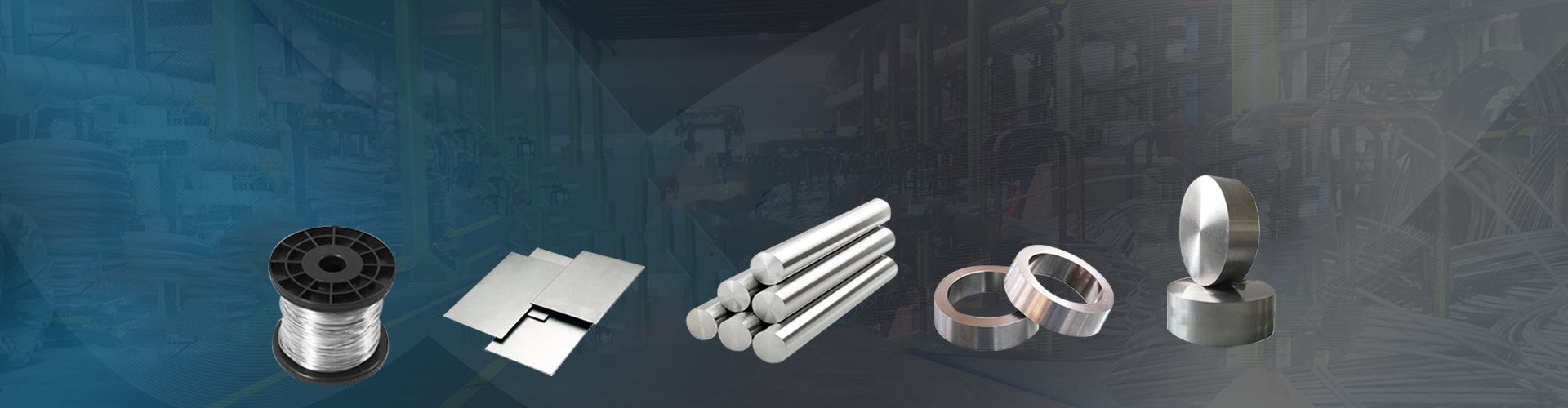
The main semi - finished products of this alloy include plates, strips, foils, rods, and wires. Plates can be made into sheet - metal parts, pressure vessels, and solid - rocket - engine cases. Strips can be made into satellite - rocket connection straps. Foils can be made into corrugated cases and honeycomb structures. Wires can be cold - headed to produce rivets of various head shapes and can be cold - riveted and hot - riveted. The rivets can be directly used after cold - heading and riveting in the solution - treated state. Rods can be cold - headed to produce bolts of various head shapes and can be used in the solution - treated state or the solution - treated and aged state.
This alloy is suitable for manufacturing aerospace fasteners that work below 300 °C and is also suitable for manufacturing space - flight fasteners that work for a short time below 500 °C.
TB2 Technical Standards
• GB/T 3620.1—1994 "Titanium and Titanium Alloys - Designation and Chemical Composition"
• GB/T 3620.2—1994 "Chemical Composition and Tolerance of Chemical Composition for Processed Titanium and Titanium Alloy Products"
• GB/T 3621—1994 "Titanium and Titanium Alloy Plates"
• K/JC 2—1984 "Provisional Technical Specification for TB2 Alloy Strips for 'Satellite - Rocket Connection Straps' of Communication Satellites"
• GJB 2219—1994 "Specification for Titanium and Titanium Alloy Rods (Wires) for Fasteners"
TB2 Heat - treatment System
(1) Solution Treatment
Select the solution - treatment temperature within the range of 750 - 800 °C. The usual solution - treatment regime is 800 °C ± 10 °C, 3 - 30 minutes, air - cooled or cooled more quickly.
(2) Aging
Select the aging temperature within the range of 450 - 550 °C. The usual aging regime is 500 °C ± 10 °C, 8 - 24 hours, air - cooled or furnace - cooled.
(3) Stress - Relief Annealing
650 - 700 °C, 30 - 60 minutes, air - cooled or furnace - cooled.
TB2 Melting and Casting Process
The alloy should be melted by a vacuum consumable - electrode arc furnace more than twice.
TB2 Application Status and Special Requirements
Various - sized satellite - rocket connection straps made of TB2 alloy strips have been used in the aerospace industry for a long time. Various - headed rivets made by cold - heading TB2 alloy wires have been applied in the aviation industry. Rods can be cold - headed to produce bolts such as internal - hexagon, external - hexagon, and countersunk - head bolts, which can be supplied for application in the aviation and aerospace industries. The service temperature in the solution - treated state is below 200 °C, and the service temperature in the solution - treated and aged state is below 300 °C.
TB2 Corrosion - Resistance Performance
TB2 alloy has good corrosion resistance and resistance to contact corrosion. When it is in contact with stainless steel, basically no corrosion occurs. When it is in contact with aluminum alloy and structural steel, the alloy itself does not corrode, but the dissimilar metals are corroded. After anodization of this alloy, its mechanical properties are not significantly affected, but the corrosion rate of the structural steel and aluminum alloy in contact with it can be slowed down.
Previous: The characteristics of titanium plates are as foll